

Dubai AI Group™ Research
Dubai Investment Outlook 2026: Capital, FDI and the AI Economy
A detailed outlook on Dubai’s 2026 investment landscape across FDI, finance, private capital, AI, advanced infrastructure, venture funding, and technology commercialization.
- Publication
- Research Paper
- Topic
- Investment / AI Economy
- Published
- Reading time
- 6 min
- Institution
- Dubai AI Group™
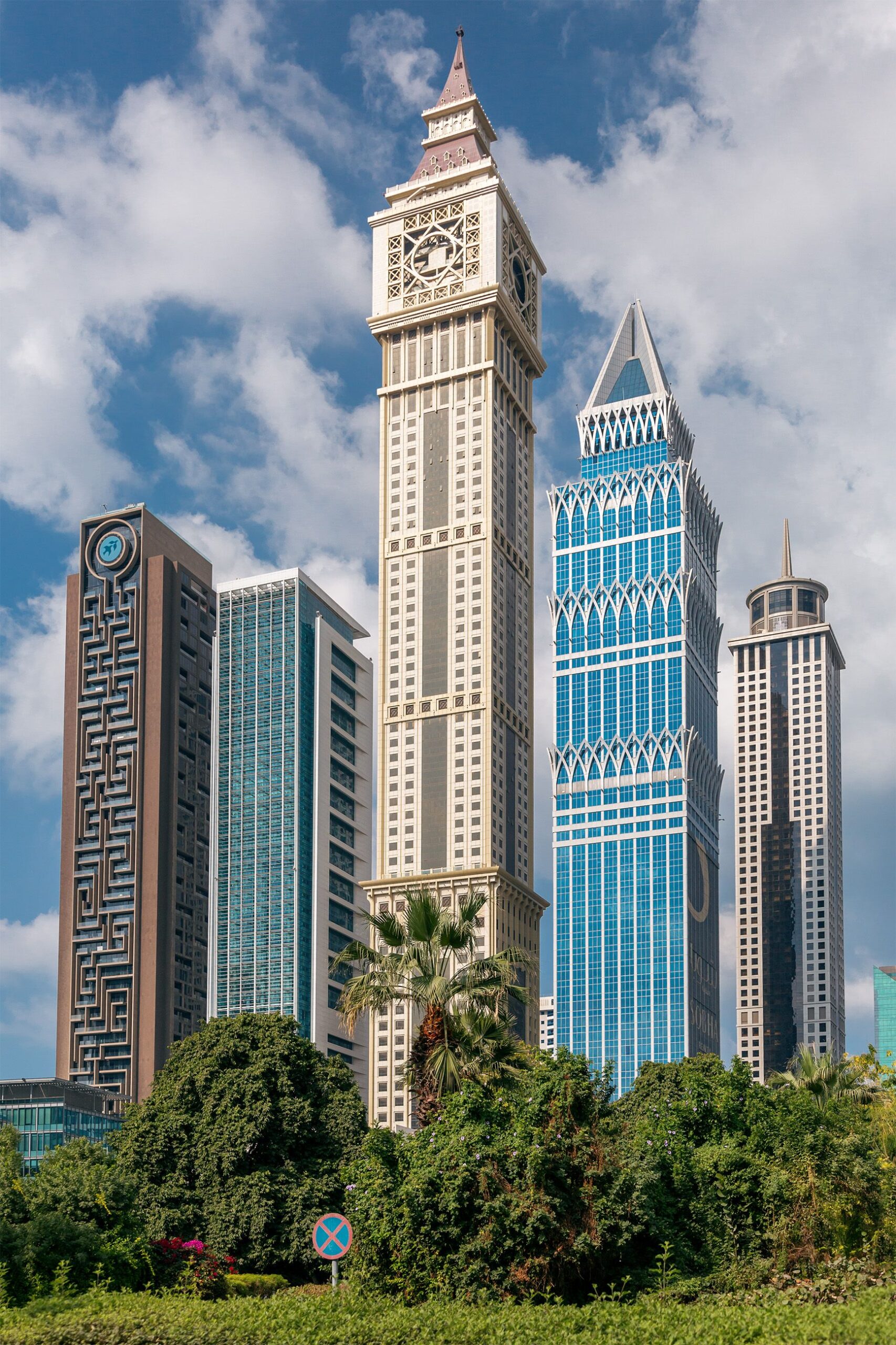
Dubai’s 2026 investment story is moving beyond property and regional headquarters toward a broader capital architecture built around finance, artificial intelligence, advanced infrastructure, technology commercialization, private wealth, and global greenfield investment. The opportunity is significant, but the quality of capital allocation will matter as much as the volume of capital attracted.
Dubai AI Group Research · September 2026
Executive perspective
Dubai is increasingly functioning as a capital intersection between Europe, Asia, the Middle East, and Africa. Its investment model combines global FDI, family wealth, institutional finance, venture capital, corporate expansion, infrastructure development, and government-led strategic projects. In 2026, artificial intelligence is becoming a connective layer across these categories.
The result is an investment environment in which AI is not a standalone vertical. It influences financial services, data centres, robotics, logistics, smart-city infrastructure, real estate, professional services, advanced manufacturing, and enterprise software.
1. Greenfield FDI remains a core signal
Dubai retained the No.1 global position for greenfield FDI projects for the fifth consecutive year based on 2025 results announced in June 2026. It also maintained the No.1 ranking in AI-related greenfield projects for the fourth consecutive year and remained first for headquarters greenfield projects.
Greenfield projects are particularly useful for understanding investment quality because they generally represent new operating capacity rather than only a transfer of ownership. New offices, engineering teams, labs, production facilities, logistics operations, and regional headquarters create local demand, employment, supplier relationships, and knowledge transfer.
2. AI becomes an investment thesis across sectors
Dubai’s AI investment thesis is broadening from startups to infrastructure and industry transformation. DIFC’s plan to become an AI-native financial centre, the expansion of Dubai AI Campus, the private-sector agentic-AI initiative, and District IO all point toward a multi-layer market: applications, governance, data, compute, robotics, cybersecurity, identity, infrastructure, and talent.
DIFC reported 1,933 AI, FinTech, and innovation companies in H1 2026, up 39% year on year. Its AI-native programme is expected by DIFC to generate USD3.5 billion in economic value and create 25,000 jobs. These are forward-looking programme estimates rather than realized outcomes, but they illustrate the scale of institutional ambition around AI commercialization.
3. Financial infrastructure is scaling with investment demand
DIFC surpassed 10,000 active registered companies in H1 2026. Its continued expansion matters because investment markets require more than capital: they require legal frameworks, banking, asset management, insurance, arbitration, professional services, fund structures, data protection, and trusted counterparties.
The planned DIFC Zabeel District—estimated at more than AED100 billion in gross development value—is designed to materially expand that capacity. More than one million square feet is planned for future technologies and AI, while the broader district is intended to accommodate tens of thousands of companies and a significantly larger workforce over time.
4. Infrastructure projects are becoming investable technology platforms
Dubai Silicon Oasis’ District IO represents another form of investment: long-duration infrastructure intended to attract future-technology firms and R&D activity. The AED11 billion project targets sectors including AI, quantum computing, robotics, smart mobility, advanced manufacturing technologies, and Web3.
Official projections indicate potential to attract up to AED30 billion in FDI by 2036. For investors, the key question is how much of that capital ultimately produces defensible intellectual property, exportable technology, research capability, and high-value employment rather than only real-estate absorption.
5. Private wealth expands the capital base
Dubai has also strengthened its position as a centre for private wealth and family capital. DIFC reported 1,408 family-related entities in H1 2026, up 36% year on year. Family offices can become an important bridge between traditional asset allocation and direct investment into technology, growth companies, funds, infrastructure, and private markets.
The strategic opportunity is to convert wealth concentration into deeper risk capital for companies building from Dubai—not only capital managed from Dubai.
6. Venture and scale-up capital remain a critical test
Dubai has strong company-formation and international-investment momentum, but the durability of its AI ecosystem will depend on scale-up financing. Early-stage startup activity can create a broad base of experimentation; later-stage capital determines whether companies can hire deeply, build enterprise sales teams, fund compute, expand internationally, and remain headquartered in the ecosystem.
DIFC has reported that startups connected to its Innovation Hub and Dubai AI Campus have collectively raised more than USD4.5 billion regionally. The next useful measure is not only aggregate funding but the number of Dubai-built companies that progress from seed to growth stage, generate recurring revenue, develop proprietary technology, and expand globally.
7. Investment opportunities emerging from the AI economy
AI infrastructure. Compute, cloud, data platforms, inference optimization, cybersecurity, observability, and integration.
Agentic enterprise systems. AI agents that execute workflows across finance, logistics, service operations, software, and professional work.
AI governance and assurance. Model and agent inventories, risk assessment, evidence management, monitoring, ratings, identity, audit, and compliance infrastructure.
Robotics and physical AI. Autonomous mobility, industrial systems, service robotics, inspection, logistics, and connected infrastructure.
Advanced computing. AI accelerators, quantum-readiness, post-quantum security, edge computing, and high-performance research infrastructure.
Vertical AI. Financial services, real estate, aviation, tourism, healthcare, logistics, construction, energy, and government-adjacent service platforms.
8. Capital discipline matters
Strong investment inflows can create valuation pressure and encourage capital to follow narratives rather than operating fundamentals. For AI investments, investors should distinguish between model wrappers and defensible platforms, pilots and production deployments, announced partnerships and contracted revenue, generic automation and proprietary workflow integration, and compute consumption versus durable product value.
The quality of governance also becomes material. AI companies may hold sensitive data, execute autonomous actions, depend on third-party models, or operate in regulated environments. Investors increasingly need to evaluate security, data rights, model dependencies, AI governance, auditability, and operational resilience alongside traditional commercial metrics.
9. Dubai’s position in the wider UAE capital system
Dubai should also be understood within the broader UAE investment environment. The UAE attracted a record AED177.3 billion in FDI inflows in 2025, according to 2026 reporting based on UNCTAD’s World Investment Report, while remaining one of the world’s leading destinations for greenfield projects.
Dubai contributes a distinct combination of private-sector density, financial infrastructure, global headquarters, tourism and trade connectivity, and technology commercialization. Other parts of the UAE add sovereign capital, industrial scale, energy, advanced research, and major compute infrastructure. Together, these create a larger national platform that can support investment across the full technology stack.
2026 investment outlook
Dubai’s investment opportunity in 2026 is strongest where capital meets operating infrastructure. The market is moving toward a model in which investors can fund not only companies but the enabling layers around them: AI campuses, financial infrastructure, data systems, governance platforms, robotics, compute, and industry-specific transformation.
The next stage should be evaluated by outcomes: capital deployed into productive assets, companies reaching scale, research commercialized, global revenue generated from Dubai, and technology capability retained locally.
Dubai has already demonstrated an ability to attract investment. The strategic question for the remainder of the decade is whether it can become equally strong at compounding that investment into globally competitive technology institutions.
Research references
- Government of Dubai Media Office — Dubai ranks No.1 globally for greenfield FDI projects
- DIFC — H1 2026 performance and AI / FinTech ecosystem
- DIFC — 2025 annual results and innovation ecosystem
- DIFC — AI-native financial centre programme
- Government of Dubai Media Office — DIFC Zabeel District expansion
- Government of Dubai Media Office — District IO and Dubai Silicon Oasis expansion
- Government of Dubai Media Office / UNCTAD context — UAE FDI inflows in 2025
Research notice
Dubai AI Group™ research is provided for general informational and research purposes and does not constitute legal, regulatory, investment, cybersecurity, or other professional advice.
Research focus
Investment / AI Economy · enterprise artificial intelligence · governance · infrastructure · intelligent systems
Continue exploring
Research on the systems shaping enterprise AI.
State of Dubai 2026: Economy, AI, Infrastructure and Institutional Capacity
A detailed 2026 assessment of Dubai’s economy, AI adoption, investment environment, financial infrastructure, institutional capacity, and technology-led development model.

AGI Prediction 2026: Scenarios for the Next Intelligence Threshold
A scenario-based 2026 research outlook on artificial general intelligence, capability thresholds, uncertainty, governance, and enterprise preparation through 2030.

Agentic AI in 2026: From Copilots to Governed Execution
Research on agentic AI, enterprise execution, agent identity, permissions, audit trails, control planes, and the governance required for autonomous systems.